
Home Blog Page 38

Am I My Brother’s Keeper? (Abortion)

0

As we approach this subject on abortion, I want to say there is hatred on both side of this issue. Some groups have the view that it is the woman’s right to choose and no one should interfere with that choice. Another group says that abortion is murder, and they have no tolerance for an opposing argument. Both of these camps, when let out of their cages, go at each other like two pit bulls in a fighting arena. Is there a middle ground? Or will there always be no agreement on this issue? As Christians and light to the world, where are we to stand on this issue?

I personally have strong beliefs on this issue, but my beliefs are nothing if not centered in the word of GOD. So let me start with you.

How in the world did you get here?

To begin with, your mother and father got together in a sexual union, and sperm and an egg got together in your mother’s body, and life began. From this beginning, 9 months of development had to pass before you became the person you are; that is, before you were born into the world. At which point were you a human being? Dr. John Rice says at the point of conception your sex was determined, the color of your eyes and hair, the way you look, your special talents, all that is you today. The only difference is that you had to develop in your mother’s womb. Now this is the natural process for you and me to become an infant child. As Sen. Paul Ryan said in the Vice Presidential debate,

“If you have any children today you probably have pictures of the baby before it was born, maybe of him or her sucking his thumb or making a fist. Sometimes the nurse would have a hard time getting us their ultrasound picture because they were moving around too much. Just as we were alive in our mothers’ body so was our boy or girl.”

So I ask you, what keeps a baby from being a baby? What would keep us from becoming a baby? Something unnatural must take place to stop the growth of this child, and that something unnatural in an abortion is when the baby is killed. This is the interruption, the stopping of the heart, the seizing of the developing brain waves occurring through a traumatic end. There can be no denying that if the fetus is left alone it will become a child. This is the only way that any of us have been brought into this world. You and I are proof of the miracles of God. He has given men and women the power to procreate, and we are here today because we we’re not a mistake, and that’s because God doesn’t make mistakes.

Now that I have shared these truths with you, I will say to you I am pro-choice.

Shocked?

However, I must say it very differently than the pro-choice of modern politics. My pro-choice is that everyone has a choice to wait until marriage before engaging in a sexual union with another of the opposite sex. You and I have a choice since you can wait until you’re in love with the one person you want to spend the rest of your life with, or have sex now. If you choose to fornicate, and break God’s command, then natural consequences come to that choice. You can get a venereal disease, you can get pregnant, and you can have your heart broken. If you get pregnant, you have already made a choice to break God’s command; so you have made your choice. I don’t believe that you should have another choice to kill the baby.

You have already made a choice.

This is pro-choice, the real choice, but now men and women want to erase their choice by eliminating a child because they choose to have sex outside of God’s place of commitment in marriage. The world (Satan) is teaching us that we all should have freedom to have sex with anyone, and have no responsibility to those we have sex with. But the act in God’s eyes is the act of commitment, and to faithfulness to the one who you have had sexual union with. Having sex outside marriage–and then killing the child–will never be right because two wrongs don’t make a right, and they never will.

Since we have established it is a child in the mother (like we were), and that the developing child will–if it is left alone–become a child. Then, that choice is something you have to make before engaging in sex. Once you have gotten someone pregnant, or have become pregnant, accept the responsibility of your choice. Remember you “had” a choice. Since this child is alive just as we are, then it follows that Christians must choose life and defend the rights of the innocent, the weak (the ones who can’t protect themselves); the unborn! What excuse can you give on Judgment Day for turning away from the little ones? Jesus said if you lead one of these little ones astray it would be better that a millstone be tied around your neck and be cast into the sea. These laws that condone abortion clinics are not only leading them astray, but killing them! Are you your brother’s keeper? The blood of the innocent cries out to God as it did against Abel.

On to answering the arguments for abortion, and closing the mouth of the lion:

Argument #1: The fetus is not a human life, therefore it may be killed.

The words fetus and embryo are Greek and Latin words that simply mean “young one.” When scientists speak of a human embryo or fetus, they are not putting it in the category of another species, but are simply using terminology for a stage of development (like the words infant, child, adolescent, or adult). A fetus is a very young person developing in the womb. In pregnancy books it is natural and correct to speak of the fetus as my baby or your child.

As we have stated earlier, from conception the child has its own genetic code. Dr. John Rice says at the point of conception your sex was determined, the color of your eyes and hair, the way you look, your special talents, all that is you today. The only difference is that you had to develop in your mother’s womb. The child has a distinctive genetic code separate from the mother; it shows us all that the child is, and that the child is not a part of the mother’s body. The child is thus a distinct individual, living temporally within her body. Ultrasound imaging reveals this to be true. You can literally follow from your child’s fertilization to its birth in baby books. A fetus is in development until it grows into the known recognizable human form.

At three weeks, a developing baby’s heart begins beating and at six weeks a baby’s brain waves are traceable. At eight weeks the arms, hands, and feet are developed with a distinct set of finger prints being formed. The ultra sound can see a baby making a fist, sucking its thumb, watch it kick, spin and make facial expressions by he/or she’s first trimester. By any reasonable standard, a human fetus is a young human being.

Thus, to kill a baby is murder no matter how young. Have you seen the horrific photo’s of aborted babies? Severed hands feet and heads wrapped up in bags and discarded as trash. This should never be hidden from those who support and vote for those who say this evil is a choice. Each person should get an education on the reality of what happens at an abortion clinic by visiting them, getting to know the procedures by watching the process. Reality will awaken the hardest advocate of abortion to the truth. I will explain three procedures in the next e-mail. Unborn children are precious human beings and must be protected, not sides of beef or drum sticks.

Argument #2: The fetus is not fully human because it is dependent on another to live.

The simple truth is that a baby that has been born cannot live without the care and sustenance from an outside source as well. The baby is dependent on others just as the unborn is on its mother. Is a kangaroo not a kangaroo because it lives in its mothers pouch? Of course not, as with human beings the location and situation does not make him or her less human. If dependency makes a person less human, then on these grounds we should have the right to kill infants outside of the womb. We should kill people on dialysis, war veterans with missing arms, people with pacemakers, the diabetics, and people in comas, handicapped people and the elderly. These people are all dependent on something outside of themselves to keep them alive.

Suppose there are two women several months into their pregnancies. One child is born premature and the other remains in the womb, the premature baby girl is utterly dependent upon medical intervention to survive, and the other is dependent upon the mother’s body to survive. How would the hospital staff react if the mother entered the baby ward with a knife to kill the premature baby girl? Is it a right to kill the baby girl? If it is not the right to kill the premature girl, then why is it right to kill the child in the womb? Both are dependent, both are children, both must have legal protection!

Argument #3: A woman has the right to do with her body as she desires.

We affirm that a women has authority over her own body. She should have the choice of who her husband will be, where she goes to college, where she will live, what kind of car she drives, what she eats for breakfast, if she wears makeup or takes a shower (we would frown at missing too many showers though). As stated earlier, a women has a choice to lay down with a man or not, but after she has, there is no right to take back what she/ they did. It is not okay to murder the innocent child. There are limits to what we can do with our bodies; including causing harm to another human being. Abortion involves the death of an innocent child. As in the US court of law, where there is due process before someone can be brought to a judgment, there is even a stricter scrutiny in the law if a person is to face capital punishment (the death penalty). Those babies have committed no crime, and are given capital punishment without a trial. For what? What evil atrocity have they committed? Let’s punish the bad people! Why do these innocent children who have done no wrong face the death penalty?

Now, to argue further that the living fetus is apart of her body, in which she can do what she wishes, I ask what part of the body is the fetus? What organ? When the child’s heart starts to beat, whose heartbeat is it? When the fetus’s brain waves can be traced, whose are they? When the body has arms and legs, whose are they? Now, both the baby and the mother have bodies; than it follows that both the fetus and the mother’s rights must be considered.

Whenever we speak of the rights of human beings, we must guard against the more powerful person taking advantage of the weaker person. It is the responsibility of the more powerful person to protect the weak. It is especially the responsibility of the mother to protect her children. Does any mother have the right to do whatever she wishes with her children? On the contrary, she has the responsibility of caring for them, or seeing that someone else cares for them. Certainly motherhood calls for sacrifice. We should expect adults to make sacrifices of their resources and freedoms when necessary to preserve the lives of children.

Argument #4: Sex and reproduction are a private matter in which we must not intrude.

Human sexuality expresses the deep intimacy that a husband and wife share. Sex has very public consequences. How we exercise our sexuality contributes to the restraint or spread of disease, the treatment of women with honor or rape, the nurture or sexual abuse of children, and the strengthening or dissolution of families that are the foundation of society. Until the sexual revolution of the 60’s adultery was considered wrong and shameful, now it is accepted as normal. This has directly effected the treatment of women and even affected marriage by creating no fault divorce laws. We have seen the moral fabric of this country slowly unwind as we have stepped away from what used to be absolutes. Society therefore should have a compelling interest to guard the dignity of marriage; women and children with respect to sex and reproduction for can see their outward effects.

People sometimes assume that the constitution guarantees the right to privacy in sexual and reproductive matters. That is not the case as you read the constitution. The fourth amendment acknowledges the right of security against “unreasonable searches and seizures without a warrant” but nothing about sexuality, children, or abortion.

Someone might sarcastically say, “I thought what I did in my bedroom was my own business.” That should be the case but, what if someone is killing a child in your bedroom? Wouldn’t that merit public intervention by the authorities? Privacy is not an absolute moral right, but killing a child is an absolute moral wrong.

Argument #5: Making abortion illegal would force women into dangerous, back-alley abortions.

The idea of the crudely done abortion resulting in a bleeding, dying mother (and dead child) has been widely used by abortion advocates. In reality, 90% of abortions were performed before they were legal were done by physicians in their offices. The idea of thousands of women dying yearly until abortion was legal is a myth that pushed society for its acceptance. In 1972, thirty–nine mothers died in the United States from abortions. The American Journal of Obstetrics and Gynecology (March 26th, 2010) admits the legalization of abortion has had no impact on the number of women dying of abortions in the U.S.

In fact, legal abortion is now the leading cause of death related to maternal deaths in the US.

Every woman who dies from a botched abortion is a tragic loss. But so is every child who dies from a successful abortion. We should not make it legal to kill babies in order to make the killing safer for the adults involved. Furthermore, abortion has medical and psychological risks; making it illegal would protect the lives and health of millions and millions of women.

Argument #6: It is better to die before birth than to live as a unwanted child.

To give a human being the power to determine the future life of another individual based on whether he or she is wanted or unwanted is most dangerous. Do we have the right to kill on the basis if we want them or not? Such a view point leads highly-cultured societies to commit genocide against the mentally and inferior races. You see that those who advocate the murder of the unwanted baby will be advocating later–as did Hitler–the murder of others that are unfit or retarded or those who are an extra burden on society. When you justify murder, there is always a next step.

Secondly, is the child never wanted by anyone? Many mothers who did not want their child prior to birth experience a change of heart after birth. There are so many parents that want to adopt a child, therefore these children are very much wanted. To say the child is not wanted now does not mean that the child will never be wanted. Did you know that Apple founder, Steve Jobs, was unwanted by his birth mother and adoptive parents?

Third, this argument has horrifying implications for the “unwanted.”  Consider these three “cases” for abortion:

  • while a woman is pregnant, she finds that the child may be deformed and deaf
  • another mom finds out her child may be a mongoloid, affected by Down’s Syndrome
  • another pregnant woman’s boy may be retarded

All of these mothers are considering abortion. Now in these cases we wait until their children are born and find that just one of the children is born with a defect; deafness. Will we kill the baby for it being born deaf? Is this not a good thing because the boy was unwanted? You say that is wrong and we shouldn’t do that! You are shocked at the thought of killing one deaf baby but are not moved when all three of these children were going to be killed by abortion.

Wake up, if it is a right to kill those who may be defective, wouldn’t it be logical to kill those who are already born who are defective, or a burden to society? Using this logic, it is the next step for a society with this worldview.

Finally, what gives us the right to decide whether it is better for a person to live or die? The 14th amendment says no one is to be deprived of life without due process of law. Where is the justification to determine the death of a person without due process? Did you consult the child? Are you the owner of that person’s life? Do you know without a doubt the future of that child? Do not many “unwanted” children overcome severe physical and mental handicaps in their life times and become useful adult citizens? Do not many people in very painful situations choose wisely to live than to kill themselves? You and I don’t know what this child’s life will be so how can we kill a child when she has not committed any crime?  In the end, what seems to be a compassionate argument for the “unwanted” child makes no sense at all. At best it is an emotional, illogical appeal; at worst it is a mask for selfishness and a murderous heart.

Conclusion

God’s word in Proverbs 8:36 says, “Those who hate me (GOD) love death.” There are many who claim they love God, yet God is the God of life. If you can vote with or condone murder at any level except for biblical life-for-life are you a Christian? You can say a lot of things but your heart is revealing the truth: you hate your unborn brother and are a murder. Revelation 21:8 says that no murderer has eternal life but will be thrown into the lake of fire. You are called to choose between blessing or cursing, life or death. I beg you to choose life.  We all will stand before our Maker and give account. Choose life.

Thank you for reading the answers to a set of hard questions. Jesus said what you have done to the least of these you have done to me: it is the will of God that man protect those who cannot defend themselves. Protect life! There is no greater issue facing the American people than abortion. This is the only issue that is truly a matter of life and death: 53,000,000 have been killed in abortions and counting!

We are able to stop this evil, so don’t vote for, nor support anyone who is for the killing of a child; no matter how young that child is.

You are your brother’s keeper!

God bless you as you defend the rights of unborn children; it is God’s will.

Scott


References

Joel R Beeke. Is abortion really so bad?

John R Rice. Sword of the Lord 1970 & SB.
What is Digital Evangelism?

If you’ve been in the Church for more than a week, you’ve likely run across the term “evangelism”. While the word evangelism has been around since the 1100’s, secular marketing and other industries have been busy expanding its definition over the past 50 years. These days, there are evangelists for pretty much everything. We have

  • Brand evangelists
  • Technology evangelists
  • Platform evangelists (has nothing to do with shoes)
  • Customer evangelists
  • Software evangelists
  • Product evangelists
  • Marketing evangelists
  • Behavioral evangelists
  • Internal evangelists
  • Food evangelists

There are even “chief evangelist officers”. No kidding.

Well today, Church, we’re stealing evangelism back.

Can I Get a Witness?

At its very basest definition, evangelism is sharing good news.

For we Christians, this means sharing thee Good News.

That’s it.

You thought you were going to get a Wikipedia definition, didn’t you?

Well, honestly, you almost did.

But truth doesn’t need to be as dusty as an encyclopedia entry. The Gospel is simple, so let’s keep ourselves simple. Jesus came to set us free. Though He continues to intercede on our behalf to the Father (and on the Father’s behalf to us,) the work of the Cross has been completed. That redemptive, restorative power has been made available to us if we yield to it.

It’s in that yielding to the work of the Holy Spirit in our lives—in not loving our own lives (agendas, calendars, possessions, ambitions, relationships and yes, even our physical lives) over Him—that allows for the transformation. From this intimate place, evangelism is born. It’s not something we have to force. As we see in the Apostles and many others since, the Good News can become so large in us it becomes something we can’t contain.

And they overcame him by the blood of the Lamb and by the word of their testimony, and they did not love their lives to the death.” (Revelation 12:11)

WWW Love (Web Witnessing With Love)

Now let’s talk about the digital part. There are three means by which evangelism flows, whether offline or on.

identity evangelism

Identity Evangelism

The expression of our lives testifies to Holy Spirit indwelling—not just through our conscious effort—but through Kingdom identity and the spiritual buoyancy right identity brings, even in the face of crisis. Our right living (or supernatural conversion to right living) witnesses to family, friends and coworkers around us. Through identity evangelism, observers watch from a distance and are drawn (or repelled) by the Father’s growing light within us. While too passive to really be called a “method,” this form of evangelism is more about being the Father’s expression of love (2 Corinthians 3) than actively proclaiming the Word (though that may be present).

Eyes Wide Open

Especially in cases where the heart-shift of regeneration is quick and dramatic, those witnessing the transformation may feel uncomfortable, confused and repulsed. (Remember, Jesus did not come to bring harmony, but a sword, Matthew 10:34.) Still, we are being recast in His image and He is love. As conflict arises (and it certainly will), old ways may try to resurface (anger, pride, willfulness, etc.) If you don’t see it in Jesus, you’re not to see it in yourself. When an expression of the old flesh presents itself, don’t lose your identity to self-condemnation; press into Him more (prayer, fasting, worship) and grace will meet you there.

Digital Expression (Organic Sharing)

What does identity evangelism look like in the digital world? Well, what do your social media posts look like? What does your personal blog speak to? If people have no idea you’re a Christian, you may look too much like the world. I’ve actually seen church leaders promote violent action and horror movies on their social media channels. As in, they were excited to go and support some dark, demonic thriller with their time, money and attention and then disconnected enough from the concepts of holiness and righteousness to promote that fallen movie to their social network.

“If people have no idea you’re a Christian, you may look too much like the world.”

Are you sold enough on the Gospel to share encouraging Bible quotes with your social media followers? Do you share Bible lessons, praise music or spiritual insights currently feeding you? Do you share your church and volunteer activities online? Or are you a closeted, weekend warrior for God? We are called to be salt. We are called to be light to a darkened world. What good does it do if a person lights a candle and places the candle under a basket? (Luke 11:33)

intentional evangelism

Intentional Evangelism

If identity evangelism is passive evangelism, intentional evangelism is active outreach. Traditionally, intentional evangelism uses signs, tracts and personal testimonies through conversation. This form of evangelism tends to be more interruptive. Breaking into a person’s trance as they pass you on the sidewalk may or may not be welcomed.

Digital Expression (Paid Promotion)

If the digital expression for identity evangelism is simply sharing your reasons for the hope inside you (along with pictures of your children and the evening’s dinner), digitized intentional evangelism is actively promoting those posts. This means paying to promote the Gospel message (or content that leads to the Gospel message) across television, radio, email and Internet marketing channels (blogs, social media, email, forums). That messaging may take the form of shareable graphics, instructional videos, podcast interviews, blog articles and other brilliant, Life-giving content.

Simply sharing your love for God in comments or images on your channels is the first step, as seen in identity evangelism. However, on some social media channels, as little as 7-13% of your followers see your posts. (Open rates for email blasts can be even lower.) This means very few of your channel subscribers are seeing your content. Most channels allow you to boost your content (for a fee, of course). Just as you would buy tracts, print flyers or take your time to street evangelize, here you simply put dollars behind Kingdom messages you produce or discover.

platform evangelism

Platform Evangelism

Platform evangelism is preaching the Gospel message from the platform you’re given, whether from the pulpit at church, the office boardroom, on the playing field or in the classroom; wherever your influence lies. Essentially, you are leveraging your authority or position in a given setting to influence thinking and culture. You have the observer’s captive attention. Now deliver the message with love, respect and wisdom.

Digital Expression (Influencer Marketing)

Yes, platform evangelism is similar to intentional evangelism in its digital expression, however there are a couple distinct differences.

First, platform evangelism leverages your social currency (your influence) or that of another, while in intentional evangelism, your audience may not even know you.

Second, platform evangelism may or may not be paid by you. An itinerant preacher who gives a powerful message while visiting a church may be recorded and promoted by that church years after their actual visit. (No pressure!)

Where and When to Evangelize

If you have concluded it’s possible to operate in different stages of evangelism at the same time, you are right. These forms of evangelism overlap considerably in places.

Well? Which form of evangelism do you think is the greatest? Is platform evangelism best, where you have the potential to reach millions? Or maybe it’s the more intimate path of intentional evangelism?

I feel the greatest of these is identity evangelism. Surprised? Without first becoming love, we’re taught we become “a clanging cymbal” (1 Corinthians 13). Even if you were the last person on earth, your identity in Him would still be the most important thing to press into.

The Christian walk is one of transformation. It is a walk of spiritual restoration, not by our hands or efforts, but of His. He is the Master Potter; we are the clay (Isaiah 64:8). When we charge ahead of Him and His plan for us, we risk doing damage to ourselves and others. I’m sure you’ve heard stories about evangelists who—being short on character—make very public mistakes, only to lose their position and their flock’s respect. We are refined by Him and made ready for more and more responsibility, in His time.

Final Thought: How Not to Evangelize

Is everyone going to be an evangelist? Well, no. And there is a danger in that, unfortunately. Not only is there that whole “spew you out of my mouth” message to the lukewarm church of Laodicea (Revelation 3:14-22), but we are also counseled by Jesus that “whosoever shall deny me before men, him will I also deny before my Father which is in heaven.” (Matthew 10:32-33)

Is every Christian called to evangelism though? Yes. This is the Great Commission, after all. Jesus told us to go forth to all nations. (Matthew 28:19, Mark 16:15, Luke 9:2) Indeed, He modeled this His entire itinerant ministry.

As mentioned earlier, you may be relieved (or slightly convicted) to hear that evangelism is actually a natural by-product of Christ within you. That means you’re not biting your lip, trying to evangelize. You’re not putting a checkmark in your proclamation box.

In fact, it may be more elegant to say we don’t evangelize (verb) as much as we become evangelists (transformation). Your evangelism will be a result of your over-the-bar heart position for the Gospel to the extent it lives in you. If you’re yielding to the Holy Spirit, dying to the Cross daily, the ensuing love affair that takes you over simply bears good fruit (Matthew 7:15-20). In 2 Corinthians, Paul writes:

You are our epistle written in our hearts, known and read by all men; clearly you are an epistle of Christ, ministered by us, written not with ink but by the Spirit of the living God, not on tablets of stone but on tablets of flesh, that is, of the heart. (2 Corinthians 3:2-3 NKJV)

So there we have it. We become living epistles. It all begins with identity evangelism, the fruit of His artistry in us.

Now go spread the news about the joy you have found.

matt signature


References

Wilson, Ross. November 26, 2012. How to Build Brand Evangelists with 3 Winning Examples. Ignite Social Media. Retrieved from https://www.ignitesocialmedia.com/social-media-strategy/how-to-build-brand-evangelists-with-3-winning-examples/.


Fundraising Ideas

0

After working with non-profits for years, I have seen plenty of wins on the fundraising front… and plenty of fails. Many organizations struggle with fundraising unless they’ve placed a real focus on it. You have two goals in any fundraising activity:

  1. Raise awareness and build community for a cause by drawing attention to the problem and presenting your organization as part of the solution.
  2. Make money. (Yes, it’s an unfortunate fact: Even humanity’s most noble causes require time, effort and resources to support.)

The downside: It often feels disingenuous to be seeking out money when our mission is so big in our hearts.

Yet, without the time, energy and resources of others, we’re often quite limited in the impact we can have for our cause.

So, raise funds we must. Cultivating donors, sponsors and supporters takes time, just as with any audience. And now you’re not just looking for an audience; you’re looking for an activated audience. You’re looking for folks who will invest in you and your cause; folks who will join you in putting some skin in the game.

In “maximum information per square inch” style, here is a list of fundraising activities you can use to advance your efforts:

Online Fundraising

  1. Register with larger retailers to receive a kickback for your audience’s purchases (e.g. Amazon Smile).
  2. Use Facebook and Qgiv ‘Donate Now’ buttons. (Not in a position to take donations online? Ask us. It’s free to get set up.)
  3. Text donations.
  4. Online auctions.
  5. Peer-to-peer fundraising.

Don’t forget to include in your messaging contact details for inquiries and links to your donation and volunteer web pages.

Most event and sponsorship activities can be promoted online, either sporadically or in a concentrated blitz (think “telethon” but across social media and your email list.) Treat the campaign as an event of its own. This means you’ll send out notices a few months in advance, you’ll be releasing images, infographics, videos and stories to pull on heart strings, etc., leading up to the big day. Can you involve the press? Are you reaching your fundraising goal? Be sure to regularly communicate your progress to your audience along the way.

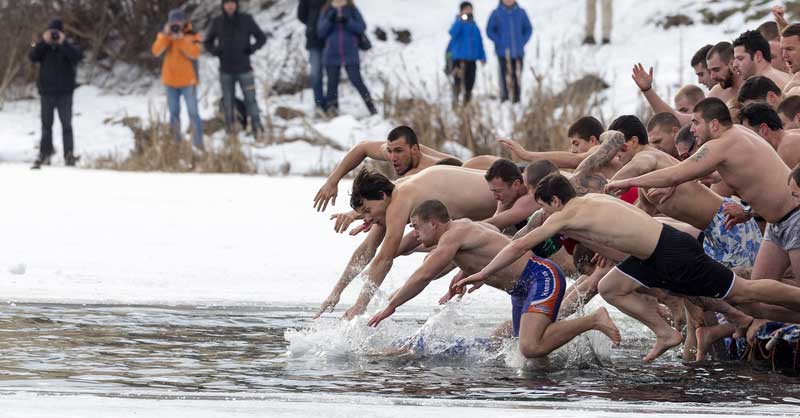
fundraisers polar plunge

Sponsorships

This fundraising category includes

  1. growing beards,
  2. shaving heads,
  3. skydiving,
  4. running races,
  5. bidding to name a beer or dish,
  6. wacky costumes and
  7. generally making good on outrageous dares so nay-sayers can put their money where their mouths are. Physical challenges (check with a doctor first) may include
  8. bzillion step challenges or
  9. workout challenges,
  10. cold water plunges or
  11. hunger challenges (water-only fast for a day or weekend).
  12. Company-matches-employee-donation campaigns.
  13. Local restaurants may help underwrite events or your organization in return for sharing their logo.
  14. Executive lock-ups (where people call everyone in their contact lists until they post their fundraising goal as “bail”.)
  15. Ask businesses to assist in underwriting your next event and work with them to design their own sponsorship package.

fundraisers donations

Donations

  1. Vehicle donations,
  2. prime parking spot exchange,
  3. employee jean days,
  4. change drive (think ‘tip jars’ at numerous businesses across your city,) and
  5. giving trees.
  6. Skip-a-meal campaigns (lunch money saved goes to cause.)
  7. Work with bottle-deposit locations to ask bottle/can collectors if they would like to give their bottle returns as a donation to your cause.
  8. You can even donate babysitting money.

Events

Most events will make their money at admission, however there are other opportunities to advance sponsorships, raffles, product sales, etc., at the event. Are local clearances, additional insurance or personal waivers needed? Begin advertising your events with save-the-date messaging around four to five months in advance. Remember to schedule the venue, catering, staff and volunteers, videographer or photographer well in advance (sometimes a year or more in advance.) Is there an opportunity to get a public service announcement (PSA) to the local news outlets? More ideas for marketing your event..

best event marketing ideas

On with the download..

  1. Photo booths (rented or make-shift),
  2. dunk tanks,
  3. celebrity appearances,
  4. karaoke,
  5. face-painting,
  6. ice cream socials,
  7. soup dinners (where local artists donate bowls patrons purchase and receive their soup in),
  8. talent shows,
  9. craft fairs,
  10. car washes,
  11. movie nights,
  12. silent auctions,
  13. lunch ‘n’ learns and
  14. pool parties.
  15. Work out a deal with a local restaurant for a breakfast or dinner ‘mob’ where so many plates translates into x% donated by the restaurant.
  16. 50/50 raffles for packages donated by local businesses,
  17. pancake breakfasts,
  18. community restoration projects,
  19. concerts and
  20. open-mic story-hours.

Events: Informational and Classes

  1. Music lessons,
  2. art classes,
  3. dance lessons,
  4. cooking classes,
  5. guided city or forest tours,
  6. after-hours museum, zoo or aquarium dinner tours; all can be a wonderful time for networking and giving.

fundraisers 5k races

Events: Competitions and Tournaments

  1. Adult spelling-bees,
  2. “Are You Smarter than a 4th Grader” adult vs kid trivia face-offs,
  3. oratory contests,
  4. photo contests,
  5. baking, chili or BBQ contests,
  6. golf, croquet or softball matches,
  7. fantasy football leagues,
  8. 5K runs (with or without obstacle courses),
  9. marathons, bi- and triathlons (really anything with “thon” at the end),
  10. ping pong, darts, bowling,
  11. scavenger hunts (entry fee plus pay extra to unlock short-cuts),
  12. corn hole, volleyball,
  13. design competitions and
  14. board games.

Events: Holiday Themes

  1. Ornament swaps,
  2. cookie swaps,
  3. not-so-spooky haunted houses (better: house of blessings),
  4. corn mazes,
  5. egg hunts, or
  6. a visit from Santa Claus.

Sell Something

Sales can happen anywhere. High school games, fairs and festivals, farmer’s markets—even through a food-truck in a parking lot.

fundraisers bake sales

  1. Cookbooks,
  2. household items,
  3. clothing,
  4. baked goods,
  5. art,
  6. candles,
  7. candy,
  8. popcorn,
  9. book swaps,
  10. tree saplings,
  11. lapel pins, or
  12. club memberships.
  13. Talent auctions (accounting, housekeeping, photography, etc.)
  14. Awareness bracelets.
  15. Hot chocolate booth (borrow machine from local restaurant or catering company in exchange for advertising them at the event.)
  16. Hold a community yard sale.

Sell Something: Holiday Themes

  1. Sell singing telegrams/carols,
  2. chocolates/candy,
  3. flowers or
  4. cards.
  5. Work with a local retailer to provide holiday gift-wrapping.

Gaming

At risk of being told this was forgotten, I want to acknowledge, that yes, there are opportunities to go Las Vegas-style in order to advance your cause. However, a word of caution: Is gambling on basketball brackets, Bingo, or Poker how you want your organization to be associated with your cause? In some areas, gambling or betting on sports games is even illegal, so best check with local authorities if you think this is something you want to explore.

Wrap Up

Hopefully, if you made it to the end of the list, you have realized that you can layer several of these ideas together at any given time. Yes, you can have an absolute fundraising feast. Just be sure you don’t get so busy chasing sustainability that you lose sight of the cause you’re sustaining.

Go forth and conquer.

matt signature

Have more fundraising ideas you would like to see added to this list? Leave a comment below!

25 Ways to Treat Your Wife

Can you say “personal reminder”? I’ll leave this right here..

  1. Take her for a walk/run/bike ride without the children
  2. Set up a surprise date (dinner, shopping, show, whatever)
  3. Gift certificates (spa, beauty, favorite store, etc.)
  4. Get a slew of household chores done
  5. Take the kids out and leave her at home
  6. Send her an ecard
  7. Send flowers to her office
  8. Bring home dinner for you both (or for the whole family)
  9. Compliment her hair or clothing
  10. Put gas in her car
  11. Plan a weekend getaway
  12. Quietly occupy the children while she takes a nap
  13. Have the house professionally cleaned
  14. Lead the children through pulling together snacks/lunches for the next school day
  15. Buy the groceries for her
  16. Get up early and make her coffee and breakfast in the morning
  17. Write a song, poem or love note
  18. Spa night at home with a face mask, bath, beach sounds, candles
  19. Take a class together (dance, cooking, language, music, etc.)
  20. Buy her something she uses a lot (hand lotion, chapstick, etc.)
  21. Buy her something she enjoys (wine, ice cream, etc.)
  22. Pack a picnic and go
  23. Tell her you love her
  24. Send her a thoughtful text or email letting her know you’re thinking about her
  25. Thank her for something specific

Youth Ministry: Teaching Prayer to Teens

0

When we first tried bringing prayer to our church’s junior-high youth ministry, we constructed a prayer wall. Built by placing plastic letter clings on a wall in our classroom, the prayer wall was simple enough. Our wall was divided into two sections, with one section labeled “Prayer Requests” and one section labeled “Answered Prayers”.

The students were encouraged to write their prayer requests on sticky notes and place them under the “Prayer Requests” heading. Our intention was to eventually move requests to the “Answered Prayers” and build a visible testimony to God’s faithfulness. We adults modeled what it might look like to pray over the notes publicly and then turned for child volunteers, hoping they would jump at the chance.

Well, it seemed 7th-9th graders were a little shyer than we thought.

After several weeks of modeling or selecting our more confident kids to reluctantly try their hand at public prayer, we realized something had to change. Even with the repeated encouragement to take time to quietly pray over the list before or after class, the prayer wall was languishing.

What Worked in the Past?

We recalled the younger grades, where the Sunday school curriculum was set by a weekly subscription. There was always a rhythm established to keep the children’s attention:

  1. Open play >
  2. Quick introduction to the lesson >
  3. Leave the classroom join other classes in “large group” to
    1. worship,
    2. receive a spoken message,
    3. view a video lesson,
    4. review the lesson,
    5. rehearse the day’s complimentary memory verse >
  4. Return to your classroom and break into small groups for an activity with group leaders >
  5. Read the memory verse and close in prayer >
  6. Open play.

See? Never a dull moment allowed for shorter attention spans. Since this early-teen class was a new level of youth ministry for our church and there was no template, we were drawing our own map. Here is the early rhythm we established for our kids:

  1. Open play >
  2. Attend worship in adult service for the first 20 minutes, until message began >
  3. Return to classroom and grab snacks (a cheap bribe to encourage attendance?) >
  4. Squeak out some prayers around the prayer wall >
  5. Review prior week’s lesson >
  6. Discuss the day’s lesson and supporting scriptures until adult service lets out.

A little dry, right?

Bring Back Video

We began experimenting with video and the kids said they appreciated it so we added short 5-7 minute video lessons to compound the learning. (Finally, a good use for YouTube. Thank you, Bible Project!)

Next, I sought advice from a colleague who regularly volunteers to work with early teens.

Youth Ministry Strategies for Teaching Prayer

Set the Tone

Before you do anything else, make sure you’re welcoming the children to the class. You’re aiming for laughter and light-heartedness. Be playful. Growing closer to God is a joyful experience. You’re there to grow in fun, faith and friendship.

Modeling and Volunteering

Now, about that prayer wall. Some of the tactics my friend mentioned we were already using. Those were:

  • Modeling prayer
  • Volunteering them for a turn

Of course, public speaking ranks slightly above the fear of death in adults, so we recognized volunteering them too soon or too often could be scary enough to drive our children away for good. And modeling wasn’t really having the encouraging effect we were hoping for. What else could we do?

Break into Smaller Groups

My friend also suggested breaking them into groups of two or three to pray. Here, my wife added her own touch to suggest having them share one thing they’re thankful for and one area where they need help. (Variation: Share best and worst experiences from the week and pray over that.)

When we piloted this in class, it worked wonderfully. We had the children self-select into pairs and then we modeled for them and set them to it. They took turns sharing and then prayed over each other. After a few minutes we gave them a one-minute warning to wrap up. Once the exercise was over, we asked them if they liked that approach and found nodding heads. Success!

If this were a workshop, we might ask our participants to share their experiences with the larger group; what they liked about it, what they might change, etc. Still, the smiles around the table were evidence they appreciated the more intimate format.

Conclusion: Smaller prayer teams needs to stay a fixture for a while. Maybe permanently.

Prayer Stations

We almost had this one. After all, we already had a prayer wall (prayer station #1.) Still, we can push the concept further by developing prayer stations. These prayer stations might focus on:

  • A religious season, say Christmas or Easter (giving to others, prophesy fulfilled, God’s love for us, etc.)
  • A local situation or people group that needs divine assistance (election results, refugee families, emergency workers, teachers, etc.)
  • Their school (pray for safety, Holy Spirit to guide faculty, clear teaching, integrity in friendships, etc.)
  • Their families (unity, health and safety, love, relationship with God, etc.)
  • Prayer itself (declaration, adoration, confession, thankfulness, supplication, intercession, etc.) (see Praying ACTS)

Using prayer stations gets the kids praying on their own (or within a small team) and it gives them guided experience with prayer; something they may not be getting at home.

Form Your Own Prayer Team Online

This is kind of like moving your prayer wall to the Internet without having to stand up a website. You can accomplish this through a Facebook group or you can use the popular group messaging application, GroupMe. You may want to get parental permission before moving forward on this one. Still, if all your kids have phones, these channels may be a good way to solidify your youth group and continue the conversation outside the walls of your church.

Reminders for Your Students

As you establish prayer in your youth ministry, be sure to remind your students the most important thing they can do is to make time for daily fellowship with the Father, Son and Holy Spirit. We must acknowledge God’s love for us. As God’s children, we have a right to approach Him, no matter what we’ve seen, done or experienced.

When praying, ensure your motivation is founded in faith (believing for what you want to see and the truth of the Gospel) as opposed to fear, loneliness, pain, discomfort (fruits of the Fall.) This is a focus on a covenant solution rather than a worldly problem.

We speak destiny and purpose over others; never doom or gloom. Prayer must flow out of love and compassion.

matt signature


Apologetics: Getting to the Gospel as Soon as Possible

0

The Definition of Apologetics

Hearing the word “apologetics,” many immediately think of our modern understanding of what it means to apologize for something as an expression of regret. This could be understandably confusing since we are talking about Christian apologetics, potentially implying that we regret being Christians. However, to do apologetics ironically means quite the opposite of “apologizing” for something.

The word comes from the Greek prefix “apo-”, which indicates a separation or a deflection of something, and the word “logos”, which is unsurprisingly where we get our term “logic.”  So, the Greek word apologia paints a picture of something that is being deflected by way of logic. The most common definition of the word apologetics is “a reasoned defense.” (Think Jude 3.)

Side note: Imagine how the conversation would go next time you needed to apologize to someone, and you offered “a reasoned defense” of your actions.

There are apologists everywhere. Every political position, sports fan base, and brand loyalty has its apologists. Every religion has apologists who defend their faith as the one true religion. Even the nonreligious have apologists who defend the secular mindset that all religions are ultimately wrong.

When it comes to us Christians, however, we take the role of the apologist to an entirely different level. Christianity is not simply supposed to have apologists; as we shall see, every Christian is supposed to be an apologist. For Christians, apologetics is not something we simply leave to “the experts.” It is something that is very much a part of what it means to be a Christian.

The most famous usage of the word in the New Testament comes from the Apostle Peter. In 1 Peter 3:15 he gives both a directive and a definition of apologetics. There Peter states:

“But sanctify the Lord God in your hearts: and be ready always to give an answer to every man that asketh you a reason of the hope that is in you with meekness and fear:”

The phrase translated into English as “give an answer” is actually one word in Greek. You guessed it: apologia. The command is clear. We are always to be ready with an answer, always ready to do apologetics.

Among a few qualities of what a good answer may look like, Peter zeros in on the main subject—“the hope that is in you.” Christian apologetics is a focused discipline with a singular goal, namely to bring people to the gospel. Jesus commissioned us to go into all the world and preach the gospel; Peter reminds us to be ready with an answer when they have questions about it.

The Need for Apologetics

As much as the world has changed since the first century, the Great Commission has not. All Christians have been tasked with preaching the gospel. The only alternative to evangelism, as they say, is disobedience.

Apologetics has always played a pivotal role in our evangelism. Christian apologist James Patrick Holding observed, “What we call ‘apologetics’ was, in fact, what the apostolic church would have called ‘evangelism.’” He goes on to explain, “Early missionary preaching testified to the historical realities upon which the Christian faith was grounded and called for repentance on those grounds.”

Indeed, if you were to review the evangelism of the apostles, personal and public, there is very little reliance on personal experience or emotional appeal. On the day of Pentecost (Acts 2:22-25), for example, Peter gave a textbook example of what he describes in his epistle. He appealed to Jesus’ miracles, culminating in his resurrection, and his fulfillment of Old Testament prophesies. On the basis of the historical reality of what Jesus had done, Peter calls his audience to repent and believe.

In our post-Christian secular age, the presence of apologetics in our evangelism is as important as it ever has been. Our culture is moving ever further away from a time when people had the same general understanding of God, the Bible, and religion. However, the popular consensus has changed in virtually every category. To talk to someone about the gospel today is a vastly different endeavor than it was years ago. Apologetics professor Travis Dickinson notes,

“More and more, apologetics does the work equivalent to what Bible translators do for an unreached people group. The Bible translator must get the content of the Gospel into the vernacular of the people for an individual to even grasp this content. Could the Holy Spirit miraculously allow the tribesman to understand the Gospel in a foreign language? Absolutely. However, it typically takes the hard work of translation. Likewise, God can bring conviction if He wants, but it often takes the hard work of engaging in apologetic discussion for someone to be able to grasp the content of the Gospel.”

In our evangelism, we declare what the gospel is, and what people ought to do about it. Yet, increasingly people ask why. Why should someone believe in any God, much less the one described in the Bible? Why should someone believe that Jesus of Nazareth was God in the flesh and that he rose from the dead? If God loves us so much, why do so many bad things happen to us? If God went to such great lengths to save us, why did he put us in a situation in which we need saving? These are precisely the questions Peter was talking about.

Pastor Timothy Keller explains further,

“I’ve heard plenty of Christians try to answer the why question by going back to the what. “You have to believe because Jesus is the Son of God.” But that’s answering the why with more what. Increasingly we live in a time when you can’t avoid the why question. Just giving the what (for example, a vivid gospel presentation) worked in the days when the cultural institutions created an environment in which Christianity just felt true or at least honorable. But in a post-Christendom society, in the marketplace of ideas, you have to explain why this is true, or people will just dismiss it.”

If the only alternative to evangelism is disobedience, which I believe it is, then the only alternative to apologetics is ineffectiveness.

The Point of Apologetics

While apologetics is vital to evangelism, it is also substantively different. There are two major objectives in apologetics that contrast from evangelism.

The first major objective is to provide reasons to believe. While evangelism declares what to believe, apologetics gives people a reason to do so. For example, many people are unaware of the abundance of manuscript evidence that demonstrates the reliability of the New Testament as a historical document. So, as astounding as much of the New Testament narrative is, we can give people reasons to believe what it says.

The second major objective is to remove reasons to doubt. While evangelism warns of the consequences of not believing, apologetics demonstrates that there are no good reasons not to believe. For example, many people have a problem with believing in the miraculous features of Christian belief because they supposedly conflict with modern scientific understanding. Yet, many Christian apologists have demonstrated that there is no real conflict between science and faith.


This is illustrated by one of my favorite metaphors for the relationship between apologetics and evangelism. Apologist Matt Slick gives the illustration of “what apologetics really is.” As he tells it, the gospel is like a garden in the middle of a field. That garden has one gate, which is Jesus. One path takes you right up to the gate. That path is evangelism, leading people to the gospel of Jesus Christ.

Unfortunately, for many people the journey to the garden is difficult. There are many paths that appear to head toward the garden but eventually veer off into some other direction. There are massive rocks and heavy brush obstructing the way. Then, in steps the apologist, pointing people back to the right path and clearing any obstacles ahead. The apologist may not be the gardener, and he is definitely not the gate. In fact, he needs the path, the gate, and the garden every bit as much as the people he helps. Nevertheless, he helps as many as he can along the way.

It is important to note the differences between apologetics and evangelism, or else we run the risk of treating apologetics as an end in itself. Even still, noting the differences helps us focus on the primary purpose of apologetics. It is easy to get bogged down and sidetracked by neverending debates and peripheral issues. But, doing so renders our apologetics fruitless.

Here’s the thing…

Apologetics is the process of getting people to the gospel as soon as possible.

It may be more than that, but it should never be less.


Travis Satterfield is a family man, teacher, and blogger. Here’s the thing… is a blend of his personal story of doubt and faith, his professional experience of teaching the Bible, and his passionate insight into theology, apologetics, and culture. Subscribe to receive email updates, follow on Twitter (@h_t_t_blog), and join the conversation on Facebook (@httblog).