

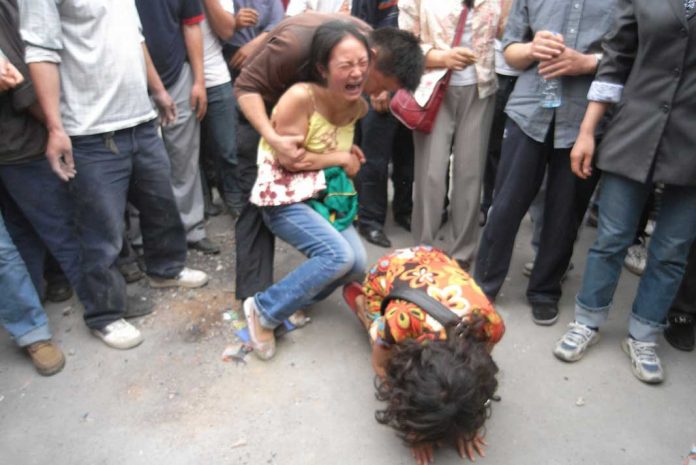
Why does God allow suffering? Explore the biblical, philosophical, and pastoral answers to Christianity’s hardest question — with honesty, depth, and real hope.
Introduction: The Question That Won’t Go Away
Her name was Maria. She had prayed for years for her marriage, raised her children in church, served faithfully in her community. Then her husband left. Then her youngest was diagnosed with leukemia. Then, sitting in the hospital chapel at 2 a.m., she whispered the question out loud for the first time in her life:
“God — why?”
You’ve asked it too. Maybe not in a hospital chapel. Maybe in a cemetery, or a courtroom, or a doctor’s office, or alone at your kitchen table after the worst phone call of your life. The question takes different shapes — Why me? Why them? Why now? Why at all? — but it always comes back to the same unbearable tension:
If God is all-powerful and all-loving, why is there so much suffering?
This is not a new question. It is arguably the oldest question in human history, and it has caused more people to doubt or abandon their faith than perhaps any other. Philosophers call it the problem of evil or theodicy — the attempt to reconcile a good God with a suffering world.
What we can do — what this article tries to do — is take the question seriously. Not dismiss it with easy answers. Not minimize real pain with religious platitudes. But engage it honestly, biblically, and with the kind of depth it deserves.
The Bible doesn’t give us one reason for suffering. It gives us several. Understanding all of them — and knowing which applies in a given situation — is essential for anyone who wants to think clearly about why suffering exists and how to respond to it faithfully.
Clearing Away the Unhelpful Answers First
Before we look at the biblical framework, we need to address one common but damaging error: not that God’s judgment is never a cause of suffering — it is — but that it is assumed to be the cause every time.
Job’s friends made this mistake. They saw his suffering and concluded immediately: You must have sinned. Jesus corrected the same assumption when the disciples asked about the man born blind: “Who sinned, this man or his parents?” He answered: “Neither” (John 9:2-3). In that case, suffering existed for a different reason entirely.
The error isn’t acknowledging divine judgment as a real category — the Bible is clear that it is. The error is defaulting to it as the only explanation, or reaching for it reflexively when you see someone suffering. That kind of assumption causes enormous damage. It heaps shame onto pain and misdiagnoses the cause, which means the sufferer responds to their situation in entirely the wrong way.
The biblical picture is more complex: suffering has multiple causes, and wisdom involves discerning which is at work. Let’s look at all five.
Five Biblical Reasons for Suffering
1. The Fallen World
The most foundational category: we live in a creation that is profoundly broken.
“God saw all that he had made, and it was very good” (Genesis 1:31). Disease, decay, natural disaster, and death are not part of His original design. That world was introduced when humanity rejected God’s order in Genesis 3 — and the consequences extended far beyond the individuals involved.
Romans 8:20-22 tells us that creation itself was “subjected to frustration” and is “groaning as in the pains of childbirth right up to the present time.” Paul is describing a systemic, cosmic brokenness woven into the fabric of the created order itself. Cancer isn’t in the world because a specific person sinned. Earthquakes don’t target the guilty. These are symptoms of a world operating under the weight of the fall — a world that is not, as God once said, very good.
This category accounts for much of what we call natural suffering: illness, aging, disability, famine, and natural disaster. Nobody directly caused these things. They are the ambient condition of fallen creation.
Importantly, this means God doesn’t look at your suffering and say “this is what I intended.” He grieves it. The tears of Jesus at Lazarus’s tomb (John 11:35) were real — the Son of God weeping at the sight of death in a world that was never supposed to know death at all. He is not indifferent to what we face in a broken world.
2. Our Own Free Will
God created human beings capable of genuine love — and genuine love requires genuine choice. You cannot program love. A creation of obedient robots would be a creation without love, without virtue, without real relationship with God.
Freedom is the condition of love. And freedom means real choices, including choices that hurt ourselves.
Much of our suffering is the direct or indirect result of our own decisions: the consequences of addiction, the relational wreckage of pride and selfishness, the physical toll of poor stewardship of our bodies, the financial devastation of foolish choices. This is not judgment in the formal sense — it is simply the natural law of cause and effect operating in a world God designed with integrity.
Galatians 6:7-8 puts it plainly: “Do not be deceived: God cannot be mocked. A man reaps what he sows. Whoever sows to please their flesh, from the flesh will reap destruction.” This is not cruelty; it is the gift of moral seriousness. A world where choices had no consequences would be a world where choices meant nothing — and where love meant nothing either.
The honesty required here is uncomfortable: not all suffering is outside our control, and wisdom demands asking whether our own choices have contributed to our pain before we look elsewhere for explanations.
3. The Free Will of Others
Perhaps the category that produces the deepest sense of injustice: suffering that results not from our own choices, but from someone else’s.
The child abused by a parent. The employee defrauded by a corrupt employer. The community devastated by a drunk driver. The generation orphaned by a war they had no part in starting. This suffering is real, it is unjust, and it is the direct result of other human beings using their freedom to harm.
God’s commitment to genuine human freedom means He does not routinely override the choices of free agents, even when those choices cause devastating harm to the innocent. This is one of the most painful aspects of the Christian understanding of God — that His love for human freedom, and His respect for the dignity of moral agency, means He permits suffering that a more controlling God would prevent.
But this is the same freedom that makes love possible. The same gift that enables a parent to choose sacrifice for their child is the gift that enables one person to choose violence against another. You cannot selectively revoke it.
What God does promise is that no injustice will go unanswered. Romans 12:19 — “Vengeance is mine; I will repay, says the Lord” — is not a threat to the guilty only. It is a promise to every victim that their suffering has been seen, that it matters, and that it will be fully reckoned with by a God who misses nothing.
4. A Spiritual Enemy Who Hates Us
This is perhaps the most neglected category in comfortable Western Christianity — and its neglect leaves believers deeply unprepared for what they face.
The Bible is explicit: there is a personal, intelligent spiritual enemy actively opposed to God and to every human being made in God’s image. His existence, his nature, and his defeat are woven throughout the whole of Scripture.
Job’s suffering begins not with a broken world or his own choices, but with a direct adversarial move by Satan, permitted by God but originated by an enemy (Job 1:6-12). Jesus describes Satan as “a murderer from the beginning” and “the father of lies” (John 8:44). Peter warns: “Your enemy the devil prowls around like a roaring lion looking for someone to devour” (1 Peter 5:8). Paul instructs us to “put on the full armor of God so that you can take your stand against the devil’s schemes” (Ephesians 6:11).
This enemy hates what is made in God’s image. He hates human flourishing, human love, human dignity, and human salvation. Where he has opportunity, he brings destruction — in marriages, in minds, in bodies, in churches, in nations.
And here is the great reversal at the heart of the gospel: the cross, which appeared to be Satan’s greatest victory, was in fact his decisive defeat. Colossians 2:15 tells us that at the cross, God “disarmed the powers and authorities” and “made a public spectacle of them, triumphing over them.” The powers and authorities — the spiritual forces arrayed against humanity — were made fools by Jesus’ sacrifice. What they orchestrated to destroy the Son of God became the very instrument of their undoing.
The enemy is real, his hatred is real, and much of the suffering in the world — especially targeted suffering against believers, against marriages, against minds — has his fingerprints on it. But he is a defeated enemy. He operates on borrowed time, within limits God sets, toward an end he cannot prevent. His activity accounts for suffering in the world, but it does not mean he is winning. It means the battle is real — and the victory is already secured.
5. God’s Judgment and Correction
This category is real, it is clearly biblical, and it has been pastorally avoided for so long in many churches that believers are left without the theological tools to recognize it when it applies to them.
Scripture is unambiguous that God sometimes allows — or brings — suffering as judgment for sin or as correction for His people.
National and corporate judgment: Israel’s exiles — both the Assyrian exile of the northern kingdom (722 BC) and the Babylonian captivity of Judah (586 BC) — were not random disasters. They were the fulfillment of specific warnings God had given through the prophets, consequences for sustained national covenant-breaking. The suffering of exile was real and devastating. It was also, explicitly, God’s judgment. “The LORD warned Israel and Judah through all his prophets and seers: ‘Turn from your evil ways. Observe my commands and decrees…'” (2 Kings 17:13). They did not turn. They went into exile.
Personal judgment and correction: David’s adultery with Bathsheba and the murder of Uriah produced devastating personal consequences. The child born of that union died (2 Samuel 12:14-18). Nathan the prophet made clear this was divine judgment: “Because by doing this you have shown utter contempt for the LORD, the son born to you will die.” David’s suffering was not random. It was not the work of the enemy alone. It was the response of a holy God to the actions of a man He loved — a man who had sinned grievously and publicly, and whose public sin required a public reckoning.
Hebrews 12:5-11 frames this dimension of suffering in the most intimate terms: “My son, do not make light of the Lord’s discipline, and do not lose heart when he rebukes you, because the Lord disciplines the one he loves, and he chastens everyone he accepts as his son.” The passage continues: “No discipline seems pleasant at the time, but painful. Later on, however, it produces a harvest of righteousness and peace for those who have been trained by it.”
This is not the portrait of a cruel God. It is the portrait of a Father. Good fathers discipline their children. A father who allows his child to run into traffic rather than restrain them has not loved them — he has abdicated. God’s corrective suffering, where it occurs, is an expression of love, not its absence.
How to discern this category: Recognizing divine discipline requires honest self-examination and, often, wise counsel. The questions to ask are:
- Is there unconfessed sin in my life that I know needs to be addressed?
- Have I been ignoring consistent warnings from Scripture, from wise believers, or from the Holy Spirit?
- Does the suffering connect directly to a specific area of disobedience?
This is not license for others to make these judgments on your behalf. Job’s friends were rebuked precisely for assuming this explanation without warrant. But honest self-examination before God — asking Him directly, as David did in Psalm 139:23-24: “Search me, God, and know my heart… see if there is any offensive way in me” — is always appropriate when suffering arrives.
And when God’s discipline is the cause, the response is not bitterness or despair. The response is repentance, restoration, and trust that the One who disciplines also redeems.
They Don’t Always Come Alone
An important caution: these five categories are not always cleanly separable. Real suffering is often the convergence of multiple forces at once.
Consider Job: he suffered because a spiritual enemy targeted him (Category 4). He also suffered in a fallen world where his body could be afflicted and his children could die in a storm (Category 1). His friends’ unjust accusations were the free will of others adding to his pain (Category 3). And yet the entire episode took place within boundaries God set and purposes God was working (elements of Categories 4 and 5 intertwined).
Consider Israel’s exile: a fallen world (Category 1), the consequences of collective sinful choices (Category 2), the aggression of enemy nations using their freedom to conquer (Category 3), potentially spiritual forces behind those empires (Category 4), and explicitly God’s judgment (Category 5) — all operating simultaneously.
Wisdom doesn’t demand finding the single reason for suffering. It asks: which of these are at work here, and what is the appropriate response to each?
The Cross: Where All Five Meet
The crucifixion of Jesus Christ is the event where every category of suffering converges.
A fallen, broken world contributed to it. Human free will — of Judas, of the religious leaders, of Pilate — drove it. The free will of others who hated and betrayed an innocent man. The direct activity of Satan, who entered Judas (Luke 22:3) and believed he was engineering his greatest victory. And yes, even the purposeful will of God — “it was the LORD’s will to crush him and cause him to suffer” (Isaiah 53:10) — not as cruelty, but as the willing sacrifice through which all suffering would ultimately be answered.
The cross does not explain suffering from the outside looking in. It does something more significant: it proves that God is not watching from a safe distance. He entered it. In His own body. With His own blood.
“My God, my God, why have you forsaken me?” (Matthew 27:46). These are not the words of a God untouched by suffering. They are the words of a God who went all the way down into the deepest darkness of human experience and took its full weight on Himself.
And the resurrection is the announcement that suffering does not win. Death is not final. Injustice is not permanent. The defeated enemy is not triumphant. Every tear will be wiped away (Revelation 21:4). Every wrong will be made right. The story does not end in the grave.
What NOT to Say to Someone Who Is Suffering
The greatest damage done in the name of theodicy is usually done by well-meaning people who reach for explanations before they reach for presence.
Avoid:
- “Everything happens for a reason” — Theologically debatable and almost never helpful in acute pain
- “God must have needed another angel” or “God must have needed them more than we do”— Not biblical, and besides, angels are a completely different creation
- “This must be God’s judgment” — Never yours to declare about another person’s suffering
- “You just need to have more faith” — Usually cruel and almost always wrong
- “I know exactly how you feel” — You don’t
What suffering people need most is not explanation. It’s presence. Sit with them. Say “I don’t know why either.” Say their loved one’s name. Weep with those who weep (Romans 12:15).
Job’s friends were at their best when they sat in silence with him for seven days. They were at their worst when they started talking.
Frequently Asked Questions
Q: How do I know which category applies to my suffering?
A: Start with honest prayer: “God, search me and know my heart. Is there something You’re correcting? Is there an attack I should resist? Help me understand what I’m facing.” Ask wise, spiritually mature believers who know your situation. Study the Psalms — David moved through multiple categories in the same poems, often without resolution. Don’t demand a single neat answer; ask God for the wisdom you need to respond faithfully to what you’re in.
Q: Why do children suffer? They haven’t done anything wrong.
A: Children’s suffering is most often accounted for by Categories 1, 3, and sometimes 4 — the fallen world, the choices of others, and spiritual opposition — rather than their own choices or divine judgment. It is the sharpest edge of the problem, and there is no answer that makes it feel okay. What Scripture promises is that God sees every child who suffers, that Jesus specifically identified with and protected children (Matthew 18:1-6), and that every injustice will be fully answered in the end (Revelation 21:4).
Q: If the enemy is defeated, why is he still causing suffering?
A: His defeat at the cross was decisive but not yet fully implemented — like a war whose outcome is determined but whose final surrender hasn’t occurred. Revelation describes an enemy who once knew “his time is short” (12:12) and raged because of it. He will be released for a short time at the end to blind the nations to the gospel once more (Revelation 20:7). He operates within limits God permits, toward an end he cannot prevent. His activity is real, but he is not winning. He is losing, visibly, and every believer who stands firm in suffering is living proof of it.
Q: How do I trust God again after severe suffering?
A: Honestly and slowly. Grief and trust are not opposites. The Psalms of lament (Psalm 22, 42, 88) give language for the journey. Give yourself permission to be angry and to ask hard questions. Reconnect with what God actually promised — His presence, ultimate redemption, and final justice — rather than assumptions you may have carried about what following Him would cost. And find community that can hold you while trust is rebuilt. You don’t have to figure it all out before you’re allowed to keep going.
A Final Word
The cross and resurrection are not the end of suffering. We still live between the decisive victory and the final consummation. Suffering is still real, the enemy still prowls, the world is still broken, and human choices — including our own — still carry consequences.
But the God who asks us to trust Him in suffering is not asking us to trust a God who stands apart from it. He is asking us to trust the God who entered it, absorbed it, was destroyed by it, and walked out of the grave on the other side.
“He will wipe every tear from their eyes. There will be no more death or mourning or crying or pain, for the old order of things has passed away.” (Revelation 21:4)
Everything new. Every wrong made right. Every question answered. Every tear accounted for.
Until then — discern carefully, grieve honestly, resist the enemy, examine your heart, trust the Father, and keep going. He is with you in all of it.
Related Articles
Continue Your Journey:
-
- 15 Bible Verses for Anxiety: Finding Peace When Your Mind Won’t Rest — Scripture for when suffering brings anxiety
- Prayers for Anxiety Relief: 25 Powerful Prayers — How to pray when you’re in pain
- A Christian’s Guide to Mental Health: When to Pray, When to Seek Professional Help — When suffering affects mental health
- How to Pray When You Don’t Know What to Say — Finding words when pain has taken yours
Need Support Right Now?
-
-
- National Suicide Prevention Lifeline: 988 (call or text)
- Crisis Text Line: Text HOME to 741741
- Focus on the Family Counseling: 1-855-771-HELP (4357)
-
Keywords: why does God allow suffering, problem of evil, why bad things happen to good people, theodicy explained, God and suffering